

Wave Fibre Mill
Small-town mill spins success with ethical textiles
Source: Jeff Turl, Baytoday.ca
Nov 30, 2025 12:30 PM
In a quiet corner just south of Parry Sound, a small but mighty textile mill is weaving together sustainability, community, and style. Meet Wave Fibre Mill.
Wave Weir is the owner of a spinning and weaving mill, which processes products from Canadian farmers coast to coast.
Weir's vision is "a world in which we all have access to locally produced, non-toxic, natural fibre clothing and products that do no harm to the wearer or the environment that sustains us."
The company had a display at the Northern Ontario Pavilion at the recent Royal Agricultural Winter Fair in Toronto, where its products drew plenty of interest.
"We have a line of clothing, and we've self-mandated to be Ontario-grown; we do not use spinning oils and things like that," she told BayToday. "Basically, there's some soap and soda ash and nothing else. So all of the browns, greys and things like that are all the colour of the animals, and we do small batch natural dyes."
Weir says she's always gravitated toward making her own clothes.
"I went to natural fibre. I once had a natural fibre business that I sold 20 years ago. I thought this time I would resurrect the business, but I wanted the natural fibre that I was using to be within my fibre shed. Not being able to find it, I just thought, 'Okay, let's start a mill.' Our area needs jobs, farmers desperately need more chances to process, and I just need fabric and things."
So the dream became reality, and she now oversees a new business with nine employees and three volunteers.
"We support four cottage industries, and in the three years since we started, it's grown like crazy. We're kind of at the point where we're realizing that, 'Hey, we're actually going to survive, and the interest is growing."
Its mission is to create the cleanest, greenest, and most responsible yarn, fabric, clothing, and products. At the heart of the business lies a simple, radical question: "How can we clothe ourselves without poisoning our planet or exploiting its people?"
The answer that Wave always comes back to is“First, you raise a sheep.”
Wave Fibre Mill now has a full-time store on site at the Parry Sound Municipal Airport, just off Highway 400.
"People are finding us. They're coming to our store, where we do workshops. A lot of things are going on, and the interest and demand for natural, non-toxic, long-wearing, slow-fashion issues is growing very quickly."
That doesn't surprise Weir, who grew up "organic", knowing what it means to be local, sustainable, and mindful of carbon footprints.
"We know what's going on in our bodies, and then we start thinking, 'Well, what's going on on top of our bodies?' and we're now understanding that the toxins in clothing, we absorb into our body forever, and then when you dump it somewhere, it's toxic waste. So we're starting to understand that."
Weir says there aren't a lot of choices for people who follow this lifestyle. She says people are realizing that society has to change.
"So people are looking. They are very discerning. They want to know our philosophies, who we employ, are they happy employees? Basically, what we put into it, where it comes from, and where it's going to go. So it's really getting to be an interesting time."
At her booth at the Fair, Weir displays some of her more popular products.
"We have a little halter dress, like a sleeveless dress. We do make things in linen as well. Linen flax grows beautifully here in Ontario, but there's nowhere to process it. So I'm importing that, but we do a little halter dress, both in wool and linen. That's a big seller. Our sweaters go like crazy. We're kind of hard-pressed to keep up with a lot of things."
The Northern Ontario Pavilion is sponsored by FEDNOR, the Federal Economic Development Agency for Northern Ontario, a Government of Canada agency that works to create jobs and economic growth in the region. Weir says having a booth at the Fair has been a wonderful opportunity.
"The people who organize this have been incredibly supportive, and it's definitely educating people. We get both ends. We get people who don't even know sheep can be black. We've talked to a lot of farmers who shear fleece, and a lot of farmers don't know what to do with their fleece. You have to shear a flock every year. Some are burning, some are burying their fleece, so we're talking to farmers, we're talking to people that are very interested in pure, natural clothing. So people come at it from a lot of different angles, and this show is definitely a gathering point for many, many different types of people and interests."
Weir says one thing she has found interesting is not the common question of what a woman is doing owning a business, but why is a woman her age starting a business?'
"I just say, 'Well, it needed to be done, and how old do you plan on being when you give up on life? So, we have a 16-year-old summer student, and we have a 90-year-old, and everything in between. And so at 65, you don't lose all your knowledge, that wonderful knowledge thing. So that's been an interesting kind of thing where people look at the range of ages of people who are working.
"When I first set up my business, people were going, 'What's that? Wool, who's she?' And now they're going, 'Wow, this is pretty amazing.' And now they do know who I am. So I just kind of ignore most of that and just keep doing what I do."
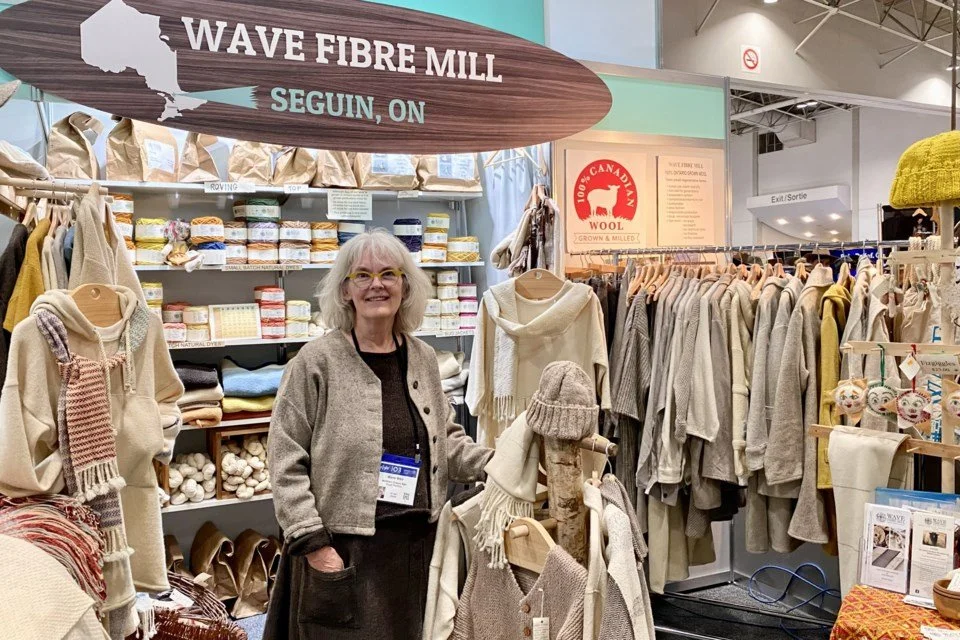
Wave Weir is the owner of Wave Fibre, a spinning and weaving mill, which processes products from Canadian farmers coast to coast.Trina Turl for BayToday
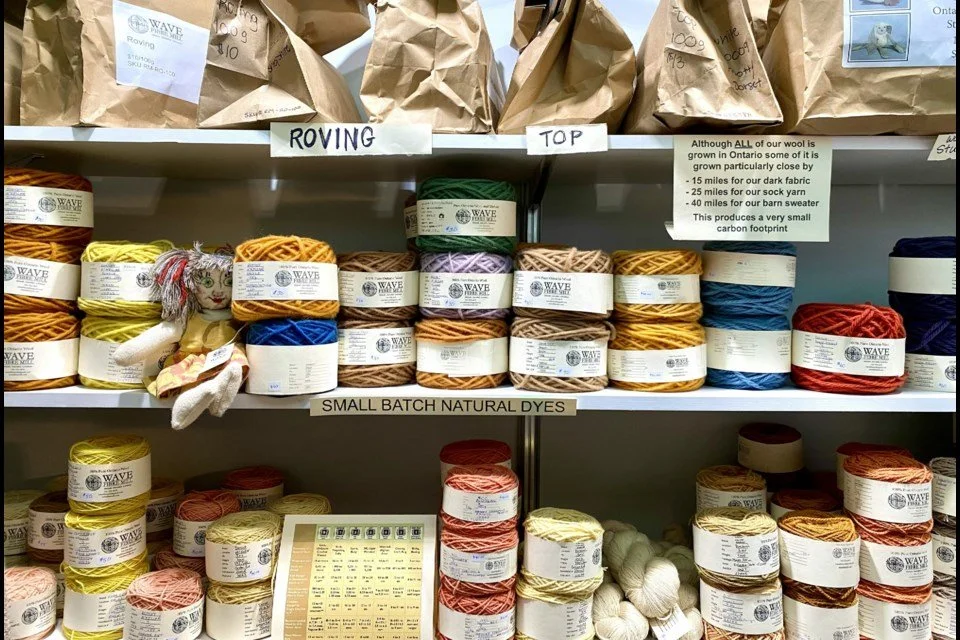
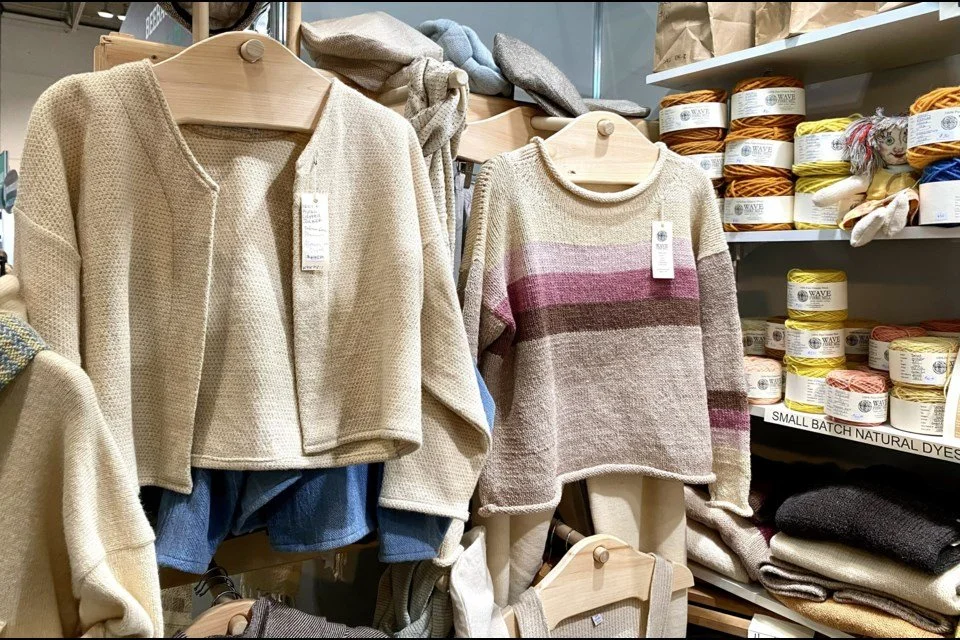
Wave Fibre's vision is a world in which we all have access to locally produced, non-toxic, natural fibre clothing and products that do no harm to the wearer or the environment that sustains us. Trina Turl for BayToday